What to Expect During a Professional Bee Removal Service in Calgary
Not every insect flying around a home is a honeybee, and not every group of bees requires removal. Bumblebees, honeybees, and wasps behave differently and may build nests in different locations, so correct identification is an important first step.
If you notice repeated activity around a soffit, wall opening, shed, tree cavity, or another part of your property, a professional assessment can help determine what is happening and whether action is necessary.
Identifying the Insects
A technician will first look at the insects, their flight pattern, and the location where they are gathering. This helps distinguish between honeybees, bumblebees, wasps, and other flying insects that are sometimes mistaken for bees.
A few insects passing through the yard may not indicate a nest. More consistent activity—especially insects repeatedly entering and leaving one opening—may suggest a nest or colony nearby. However, the entrance alone does not show exactly where the nest is or how large it may be.
Bumblebees may nest in sheltered areas such as ground-level cavities, sheds, or spaces around a structure. Wasps may build visible paper nests or establish nests in wall voids, roof spaces, or underground locations. Honeybees may occupy a protected cavity where comb and honey can accumulate.
The On-Site Assessment
During the visit, the technician will assess the location and severity of the activity. This may include checking:
- The exterior of the home, including soffits, siding, rooflines, and foundation areas.
- Sheds, garages, fences, decks, and other nearby structures.
- Visible nest material or openings where insects are entering.
- Whether children, pets, or high-traffic areas are close to the activity.
- Possible access points that may allow insects to enter a wall or other cavity.
- Whether the insects should be left undisturbed, monitored, excluded, or treated.
The purpose of this assessment is not automatically to eliminate every insect. Some pollinators and other insects may be safely left alone when their location does not create a concern. When activity is close to a home or presents a safety issue, the technician can explain the available options.
Choosing the Right Solution
The appropriate response depends on the species, nest location, accessibility, and level of risk. Possible recommendations may include:
- Leaving the nest undisturbed when it is not creating a safety or property concern.
- Monitoring activity for a period of time.
- Improving exclusion around gaps or openings after the nest is inactive or has been addressed.
- Removing an accessible nest where appropriate.
- Using targeted treatment for wasps or other stinging insects when necessary.
- Addressing a nest in a wall or other cavity with a plan suited to that particular structure.
A treatment that is appropriate for a wasp nest may not be appropriate for a bumblebee nest or a honeybee colony. That is why identifying the insect before choosing a treatment matters.
Why Sealing the Opening Is Not Ideal
It can be tempting to seal an opening as soon as insects are noticed. That may prevent further entry, but if an active nest is already inside a cavity, sealing the opening without addressing the nest can create additional problems.
Insects may look for another exit, potentially leading them farther into the building. The right timing for exclusion depends on what is present and where it is located. A professional can help determine whether an opening should be sealed immediately or after the activity has been resolved.
What About Comb, Wax, or Nest Material?
If insects have established a nest inside a wall, soffit, or another enclosed area, the amount of cleanup required will depend on the species, the size of the nest, and how accessible the cavity is.
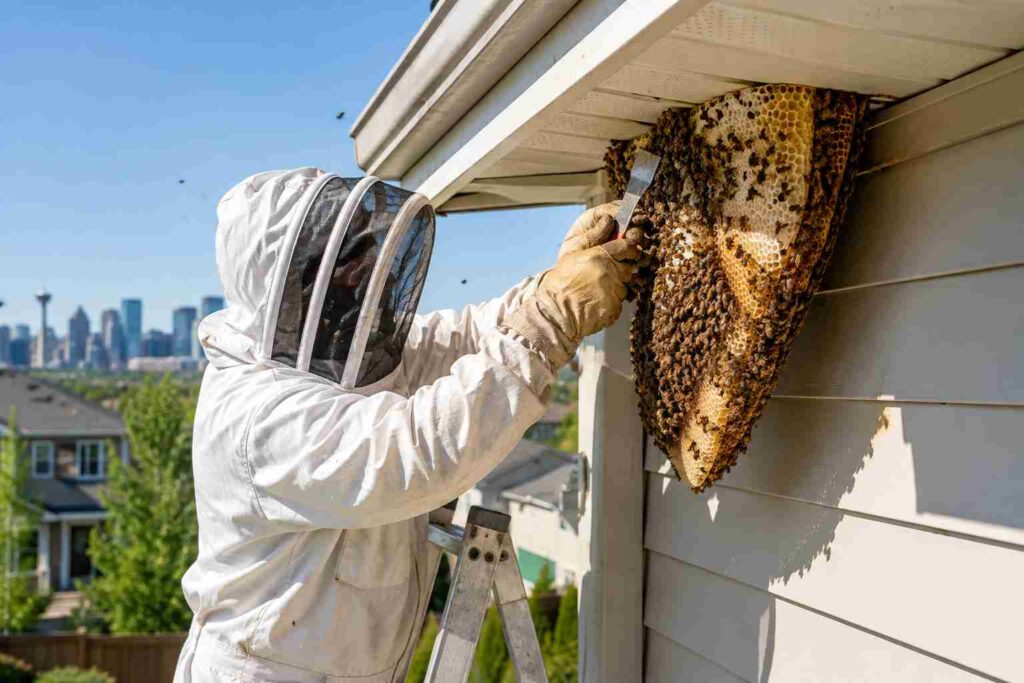
Paper wasp nest material, bumblebee nesting material, and honeybee comb are not the same. The papery material wasps use to build their nests can be left in the wall without causing any issues. Bumblebee nests as well can be left alone, as those bees do not create enough honey to cause any issues. Honeybee nests, however, can cause serious damage to the home due to excess honey leaking through.
Keeping Stinging Insects Away
After the immediate concern has been addressed, exclusion can help reduce the chance of future nesting. Useful steps may include:
- Sealing unnecessary gaps around soffits, siding, rooflines, and utility openings.
- Repairing damaged screens, vents, and exterior trim.
- Keeping food and sweet drinks covered outdoors.
- Removing fallen fruit and other attractants from patios and yards.
- Trimming vegetation away from the structure.
- Inspecting sheds, garages, and other sheltered areas in spring.
- Avoiding unnecessary disturbance of nests, especially near doors, walkways, and play areas.
Not every nest can or should be removed immediately. A seasonal nest in a low-risk location may require a different approach from an active nest inside a wall or beside a frequently used entrance.
When to Contact a Professional
Contact a professional if insects are repeatedly entering and leaving the same opening, a nest is inside a wall or roof space, activity is close to a doorway, or someone in the household has a serious sting allergy.
Grove Eco-Friendly Pest Control can assess the activity, identify the insect where possible, and recommend a practical solution based on the location and level of risk. Grove’s approach is centred on lower-impact insect management rather than applying the same treatment to every situation.
Frequently Asked Questions (FAQs)
How can I tell whether they are bees or wasps?
Appearance can provide clues, but identification is not always reliable from a distance. Bees are often fuzzier and rounder, while wasps generally have smoother, narrower bodies. A professional assessment is the safest way to confirm what is present.
Does seeing a few bees mean there is a nest?
Not necessarily. A few insects may simply be passing through or visiting flowers. Repeated activity at the same opening is more suggestive of a nearby nest.
Should I seal the opening myself?
Avoid sealing an active entry point before the situation has been assessed. If a nest is inside a wall or another cavity, sealing the opening too soon may force the insects to find another route.
Will the insects always be removed?
No. The recommended response depends on the species, location, accessibility, and safety risk. Some nests can be left alone, while others may require treatment, removal, or exclusion.
What should I do if the nest is near a door or walkway?
Keep children and pets away, avoid disturbing the nest, and do not spray or block the entrance. A professional can determine the safest next step.