How Ant Control Works in Calgary Homes
Seeing a few ants in your kitchen does not always mean there is a nest inside your walls. Ants may be entering from outside in search of food, water, or shelter, while some species may establish nests in damp wood, wall voids, crawl spaces, or other protected areas.
The first step is finding out which situation you are dealing with. That is why a proper inspection is more useful than simply treating the ants you can see.
Why Ants Appear in Calgary Homes
Ant activity often increases as temperatures rise in spring and summer. Ants may enter through small gaps around windows, doors, foundations, pipes, or utility lines. Landscaping, firewood, moisture, and accessible food can also make a property more attractive to foraging ants.
Carpenter ants deserve particular attention because they excavate wood to create nesting galleries. They do not eat wood like termites, but a colony may take advantage of wood that has already been affected by moisture or decay. Carpenter ants can also nest in wall voids, attics, crawl spaces, and other areas without immediately causing obvious damage. Luckily, they are rare in Calgary!
Other ants may simply be travelling between an outdoor nest and an indoor food source. Identifying the species and tracing the activity helps determine the most appropriate response.
What Happens During an Ant Inspection
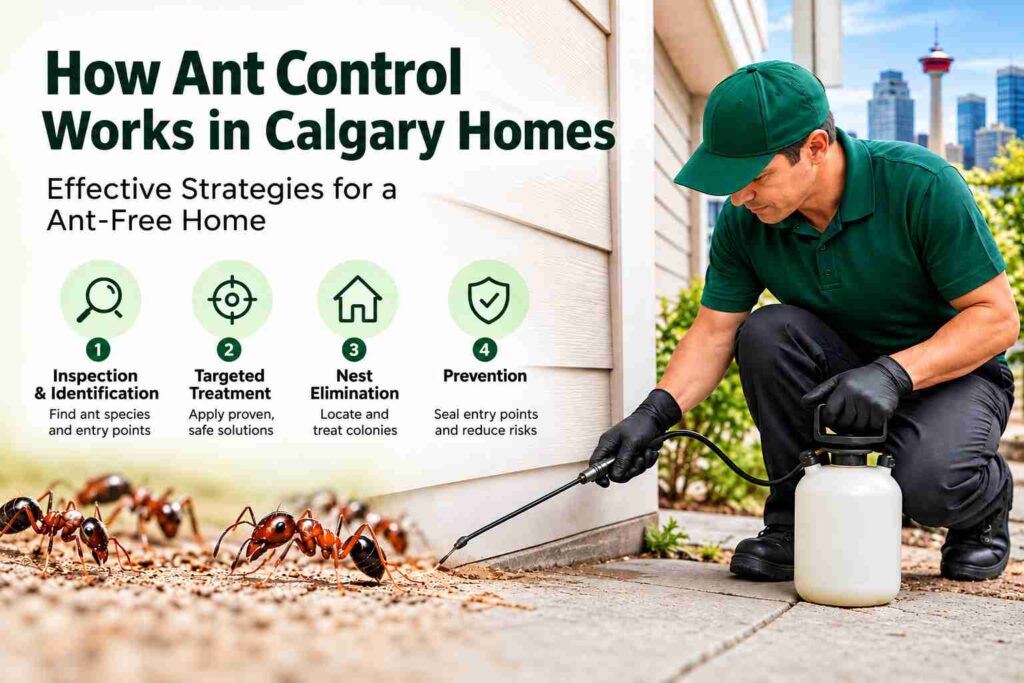
An inspection typically looks at both the indoor and outdoor areas connected to the ant activity. A technician may assess:
- Where ants are entering and where their trails lead.
- Areas around sinks, bathrooms, windows, doors, and baseboards.
- Crawl spaces, wall voids, attics, and other potential nesting locations.
- Moisture problems, leaks, decaying wood, and poor drainage.
- Foundation cracks, gaps around pipes, vegetation, and other possible entry points.
- Food sources that may be attracting ants indoors.
For carpenter ants, signs can include repeated activity in one area, small piles of sawdust-like material, damaged or damp wood, and faint rustling sounds inside walls. These signs do not prove that a colony is present, but they can help identify areas that deserve closer inspection.
A Practical, Low-Impact Approach
Grove Eco-Friendly Pest Control uses an Integrated Pest Management approach. This means the goal is not simply to apply a product, but to address the conditions contributing to the problem and monitor whether the activity continues.
Depending on the situation, recommendations may include:
- Cleaning food residue and removing accessible food sources.
- Sealing gaps where ants are entering.
- Correcting leaks or other moisture issues.
- Applying diatomaceous earth in appropriate areas.
- Using gel bait when additional control is needed.
- Locating and treating outdoor nests when they can be identified.
Treatment is selected according to the ant species, the location of the activity, and the conditions around the property. In some cases, the best solution is a combination of sanitation, exclusion, monitoring, and targeted treatment rather than applying products throughout the home.
Preventing Ants From Returning
Once the immediate activity has been addressed, a few changes can reduce the chance of future problems:
- Repair leaking plumbing and improve ventilation in damp areas.
- Seal cracks around foundations, windows, doors, and utility openings.
- Keep food in sealed containers and clean crumbs promptly.
- Store firewood away from the house and off the ground where possible.
- Trim branches and shrubs so they do not touch the exterior.
- Remove decaying wood, old stumps, and other potential nesting material near the home.
- Check areas where soil, mulch, or landscaping sits against the foundation.
These steps are useful whether ants are nesting indoors or simply using the home as a convenient source of food.
When to Call for Help
A few isolated ants may not require professional treatment. However, an inspection is worthwhile when trails keep returning, activity is concentrated in one area, ants are appearing from walls or trim, or you notice sawdust-like debris or moisture-damaged wood.
Grove Eco-Friendly Pest Control can identify the ant species, assess the conditions attracting them, and recommend a targeted control plan for your Calgary home.
Frequently Asked Questions (FAQs)
Do a few ants always mean there is a colony inside my home?
No. Some ants enter from an outdoor nest while looking for food or water. Repeated trails or activity coming from walls, trim, or other structural areas may indicate that further inspection is needed.
Are carpenter ants dangerous to a house?
Carpenter ants excavate wood to create nesting galleries. They are more likely to use damp or decaying wood, but an established colony should still be investigated and the underlying moisture problem corrected.
What is the most eco-friendly way to control ants?
The right approach depends on the species and location. Reducing food and moisture, sealing entry points, monitoring activity, and using targeted treatments can reduce the need for broader pesticide applications.
Can I deal with ants myself?
You can start by cleaning food sources, sealing obvious gaps, trimming vegetation away from the house, and correcting moisture problems. If the activity continues or appears to come from the structure, professional identification can prevent the problem from being misdiagnosed.
How long does ant control take?
There is no single timeline for every infestation. The duration depends on the species, colony location, treatment method, and whether conditions around the property are corrected.


[…] is the same philosophy we use in our own work. Our recent post on how ant control works in Calgary homes covers this in more detail, but the short version is that sanitation and sealing usually do more of […]