Bats in Calgary: What to Do If They’re in Your Home
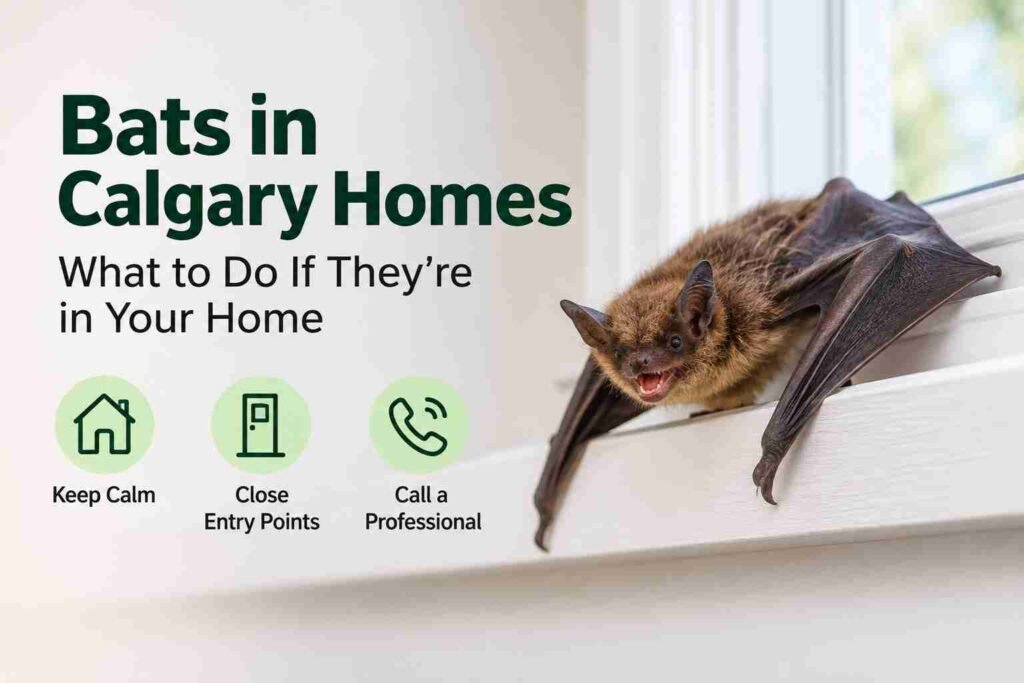
A bat swooping around the hallway at 11 p.m. is not how most people planned to spend a Tuesday. Neither is lying in bed listening to faint squeaking inside the wall behind the headboard.
First, the good news: bats are not out to get you. They’re shy, they eat a lot of mosquitoes, and they’d much rather be left alone. The catch is that they’re protected here, so the way you deal with them matters far more than it does with mice or wasps. Get it wrong and you can end up with trapped pups in your walls and a legal problem on top.
Quick answer: Don’t kill, trap, or seal off bats. They’re protected in Alberta. The right fix is humane exclusion, done after the pups can fly, from late summer into fall and ideally before the snow. If a bat is in your living space and you can’t wait, contact us or Alberta Fish and Wildlife.
Yes, Calgary Has Bats
Alberta has nine bat species, and seven of them turn up in Calgary during the summer. They stay close to water, usually within a couple of kilometres of rivers, ponds and wetlands, which is why you’ll see them around the Bow and Elbow and in older, tree-lined parts of the city.
| Species | What to know |
|---|---|
| Little brown bat | The most common bat to roost in buildings. Listed as endangered in Alberta, so extra care is needed. |
| Big brown bat | Also roosts in buildings, and may rarely hibernate in them over winter. |
| Silver-haired, hoary, eastern red | Migratory. They pass through rather than overwinter here. |
Why your house? Mostly because old hollow trees keep disappearing, and a warm attic or a loose bit of soffit makes a decent substitute.
Signs You Have Bats (and Not Mice)
Bats are quiet tenants. The clues are subtle:
| Sign | What it usually means |
|---|---|
| Small dark droppings on vertical surfaces that crumble into a glittery powder | Bats. Mouse droppings tend to squish. |
| Dark staining around a gap or under an eave | A regular entry point |
| Chirping or squeaking at dusk and dawn | A colony getting active |
| Small shapes leaving one spot after sunset | Almost certainly a roost |
Not sure which animal you’re dealing with? Our guide to telling rats and mice apart helps you rule things out. Stand outside about half an hour after sunset and watch your roofline. It’s the quickest way to know.
The Legal Part Nobody Mentions
In Alberta, it’s illegal to kill bats. That covers poison, traps, and, the one that catches homeowners out, sealing holes while bats are still inside. Foam in the gap feels like a win until you realize the bats are now on the wrong side. It’s a similar story to what we covered in how protected-wildlife rules work for woodpeckers: the law is there for a reason, and the penalties are real.
Little brown bats being endangered makes this even stricter. Alberta’s own guidance on bats in buildings says plugging holes with bats in the roost seals them in, and that waiting until fall is the answer unless there’s a health or safety concern.
Timing Is Everything
Bat removal is seasonal. Females gather in maternity colonies and have a single pup a year, so a colony that suffers a bad season is slow to recover.
| Time of year | What bats are doing | What you can do |
|---|---|---|
| Spring | Returning and settling in | Watch and learn where they enter |
| Late May to August | Pups being born and raised | No exclusion. Blocking exits traps the young. |
| Late August through fall | Pups flying, colonies leaving | The window. Humane exclusion is possible. |
| After the snow | Most gone to hibernate; some big browns may stay | Window is closing. Check for bats before sealing. |
Since fall is when it happens, don’t wait for the first hard freeze to make the decision for you.
What Humane Exclusion Looks Like
It’s methodical, not glamorous:
- Inspection. Find every gap. Bats can squeeze through a space about the width of your thumb, and they often use more than one.
- Watching the roost. Confirm where they exit at dusk and how many there are.
- One-way exits. A device lets bats leave but not return. It stays up for several days so none are left behind.
- Sealing. Once the roost is confirmed empty, entry points are closed properly. The same principles apply as in how to squirrel-proof your home.
- Cleanup and prevention. Guano is removed safely and the space is kept tight.
What Not to Do
- Don’t handle a bat with bare hands, even one that looks dead or hurt.
- Don’t seal holes “just in case” during summer.
- Don’t use mothballs, ultrasonic gadgets or sprays. They don’t work and can harm protected animals.
- Don’t try to kill them. It’s illegal and makes everything harder.
Rabies, Guano and What’s Worth Worrying About
The risk is real but small. Bats are the only wild animal in Alberta that carries rabies, but the rate is very low. Don’t handle them. If you’re bitten or scratched, wash the wound with soap and water and call public health right away.
Guano deserves more everyday caution. Don’t sweep it dry or use a regular vacuum. Wear a proper mask and gloves, or leave it to a professional.
If you find an injured bat, or one on the ground in winter, keep your distance and call the Calgary Wildlife Rehabilitation Society at 403-214-1312.
Key Takeaways
- Seven bat species visit Calgary; little brown and big brown bats are the ones most likely to roost in homes.
- Killing bats or sealing them in is illegal in Alberta, and little brown bats are endangered.
- Exclusion only happens after the pups can fly, from late summer into fall.
- Late-fall jobs need a check for bats first, since big browns can overwinter in buildings.
- Never handle a bat. Rabies is rare in Alberta bats, but bites need immediate care as it is a deadly, fast-acting disease.
- Guano should be cleaned up with a mask and gloves, not swept dry.
Summary
Bats in a Calgary home aren’t an emergency to fix tonight, and they aren’t something to deal with by yourself. The law protects them, the calendar controls when anything can be done, and the safe approach is to let them out through one-way exits and then seal up properly. Learn where they’re getting in during summer, then act in the fall.
Frequently Asked Questions (FAQs)
Is it illegal to get rid of bats in Calgary?
Killing or harming bats is illegal in Alberta, as is sealing them inside a building. You can legally have them removed, as long as it’s done humanely and at the right time of year.
When is the best time to remove bats from a house?
Late summer through fall, once the pups can fly and before hard winter sets in. Doing it earlier risks trapping young bats inside.
Can I seal the hole myself?
Not until you know the roost is empty. Sealing with bats inside is the most common way homeowners break the law without meaning to.
Do bats in my attic mean I’ll get rabies?
No. Very few Alberta bats carry rabies, and the risk comes from handling them. If you’re bitten or scratched, wash the wound and call public health.
Will bats damage my house?
They don’t chew wood or wiring the way squirrels and mice do. The issue is guano and urine building up over the years, plus the noise. The longer they stay, the bigger the cleanup.