Best Time of Year for Vole Control in Calgary (And Why Spring Is Critical)
Most people in Calgary don’t think about voles until their lawn starts looking strange. The grass lifts like a loose carpet. Thin trails appear out of nowhere. A young tree suddenly struggles for no obvious reason. By the time many homeowners realize what’s happening, the damage has already been done.
Voles are one of those pests that work quietly. They don’t announce themselves. They don’t make noise in your walls. They stay outdoors and do their damage where you’re least likely to notice it right away. That’s why timing matters so much when it comes to vole control in Calgary.
Over the years, one thing has become very clear: spring is the season where you either get ahead of the problem — or spend the rest of the year chasing it.
Why Voles Are Such a Problem Here
Calgary’s climate plays right into vole behavior. Long winters with steady snow cover give voles protection from predators. They stay active under the snow, tunneling through grass and feeding on roots the entire time. When spring finally arrives, homeowners are often shocked at what’s been happening underneath for months.
Unlike mice, voles don’t need to get into buildings to cause trouble. They damage lawns, gardens, shrubs, and trees. They chew bark near the base of trunks. They hollow out root systems. A healthy-looking yard in the fall can look rough by the time the snow melts.
This is where proper vole pest control becomes important — not just reacting, but understanding when action actually works.
Spring: When the Problem Finally Shows Itself
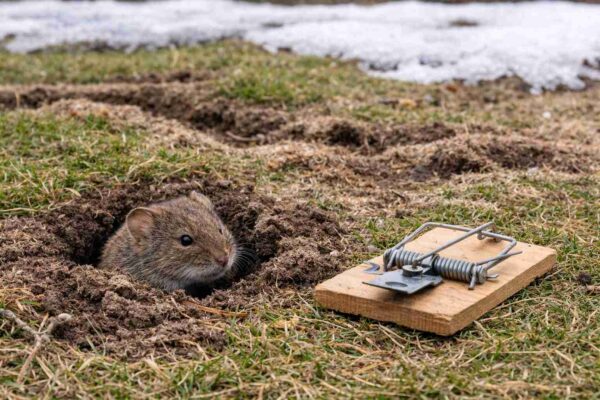
Spring is critical because it’s when voles stop hiding. As the snow disappears, their surface runways are suddenly visible. Those winding trails across your lawn? That’s not random damage. That’s a map of exactly where the voles are active.
Spring is also when voles begin breeding again. If nothing is done early, populations increase fast. What starts as a handful of animals can turn into a much bigger issue by early summer. At that point, damage spreads and control becomes more time-consuming.
From a practical standpoint, vole removal is simply more effective in spring. Activity areas are easier to find, vole traps can be placed accurately, and results happen faster.
What Happens If You Wait
Some homeowners try to wait it out, hoping the problem will “settle down.” Unfortunately, voles don’t work that way.
In summer, they continue feeding and expanding their tunnels. Gardens suffer first, then lawns. By fall, voles are actively preparing for winter again, creating protected areas that will carry them through the cold months. The voles continue to eat the grass, but they aren’t forced to make trails, they can just graze all over. That means you won’t see that damage.
Once winter hits, vole control becomes limited. They’re still active, but they’re hidden. Most of the damage isn’t discovered until the following spring — and by then, the cycle has already repeated itself.
This is why spring control isn’t just helpful. It’s preventative.
Myth: The Damage Means They’re Gone
Some homeowners assume that after the grass has been damaged, the voles have moved on.
In reality, visible damage often shows up after the most active period. Underground paths may still be in use. Nesting areas don’t disappear just because the surface looks bad.
And then in the summer you can’t see any trails and the grass grows back! But what actually happens is the voles spread their feeding out over the entire lawn instead of in thin trails under the snow, making it impossible to see the damage.
Ignoring the problem at this stage usually leads to repeated damage the following season.
Do DIY Methods Actually Work?
There’s no shortage of advice online. Repellents, homemade mixtures, sound devices — most of them offer short-term results at best. Voles adapt quickly, especially when food sources remain available.
Vole traps can be effective, but only when they’re placed correctly. Random placement rarely works. Traps need to be set directly in active runways, and those runways need to be identified properly. That’s where many DIY efforts fail.
Professional vole pest control focuses on accuracy, not guesswork. The goal isn’t just catching voles — it’s reducing activity enough that the population doesn’t rebound a few weeks later.
When Professional Help Makes Sense
If vole damage keeps coming back every year, that’s usually a sign the problem was never fully addressed. Repeated lawn damage, chewed trees, or collapsing soil are all indicators that more than basic control is needed.
Professional vole removal is especially important for larger properties, landscaped yards, and areas with recurring infestations. It saves time, prevents further damage, and often costs less than repeated repairs to lawns and plants.
How Grove Pest Control Handles Vole Problems
Grove Pest Control works with Calgary homeowners who are dealing with exactly these issues. Our approach isn’t rushed or generic. It starts with identifying where vole activity is happening and how extensive it is.
We then dig a trench around where the voles are hiding: the walkway, front steps, or a concrete pad. Then we install a wire mesh barrier underground to prevent the voles from living there. Once they no longer have any shelter, they will move on!
Local experience matters with voles, and Calgary properties all have their own challenges depending on layout, vegetation, and surrounding land. At Grove Eco-friendly Pest Control, we have the experience to know how to best solve your vole problems permanently.
Final Thoughts
Voles may be small, but ignoring them rarely works out well. In Calgary, spring offers the best chance to deal with them properly — when damage is visible and populations are still manageable.
If you’re seeing signs of vole activity now, waiting usually means more damage later. Reaching out to Grove Pest Control early can help stop the problem before it takes over your yard and turns into a recurring headache.
Frequently Asked Questions (FAQ’s)
When is the best time to deal with voles in Calgary?
Spring is the most effective time to address vole problems. As the snow melts, vole runways and damage become visible, making it easier to locate active areas and apply control methods before populations grow.
Are voles active during the winter, or do they hibernate?
Voles do not hibernate. They remain active under the snow throughout winter, feeding on grass and tree bark. Most homeowners don’t notice the damage until spring.
Will voles eventually leave my yard on their own?
In most cases, no. If food and shelter are available, voles tend to stay and reproduce. Without proper vole pest control, infestations often return year after year.
Do vole traps actually work?
Yes, vole traps can be effective when placed correctly in active runways. Incorrect placement is the most common reason traps fail, which is why professional setup often produces better results.
How can I tell if the damage is caused by voles and not moles or mice?
Voles leave shallow surface runways and small openings, while moles and pocket gophers create raised mounds and mice typically enter structures. Chewed grass, roots, and bark near ground level are common signs of vole activity.
Is professional vole control worth it?
For recurring or widespread damage, professional vole control in Calgary can save time and prevent costly lawn and landscape repairs. It also reduces the chance of the problem returning later in the season.